Blogia
Transistor kills the radio star?

3.4.3.1 ainda é rádio?

«A Rádio em Crise de Identidade?»

«A pergunta torna-se inevitável para quem assiste ao processo de crescente adaptação da rádio ao espaço aberto pela internet: a partir do momento em que o texto e a imagem se imiscuem noseu universo, terminando com a exclusividade da expressão sonora que historicamente a caracteriza, e em que ocorre toda uma série de outras mudanças significativas, haverá motivos para encarar esta transformação como o fim da rádio e o nascimento de algo ainda inominável, mas que configura um eventual novo meio?

Esta dúvida está na base de um debate pertinente, em que vários autores têm vindo a participar, balizado por dois pólos opostos, ainda que não necessariamente irredutíveis: de um lado, estão aqueles que se recusam a aceitar como sendo rádio um meio que desvirtuou algumas das suas características constituintes; do outro, encontramos os entusiastas da mudança em curso, que aceitam com naturalidade a alteração daquele que durante anos a fio constituiu o paradigma radiofónico e encaram as novas morfologias como consequência directa da sua adaptação às novas necessidades, ditadas não só pela crescente influência social da internet, mas também por um público progressivamente adaptado a mediações mais interactivas, impulsionadas pelo online.» (Tese de Mestrado de Pedro Portela, pág 52)


«Cada estação de rádio transforma-se numa estação de tv»

«Basic terrestrial radio might be the last of the truly “free” media available, requiring no costly equipment, content subscriptions or on-demand fees. But local ad revenues have been eroding and the industry is fighting to respond to satellite radio, Internet radio and downloads, MP3, a music industry in chaos, new radio HD technology, and competition from multiple new sources. Therefore terrestrial radio is struggling to define its core mission and place in the information/entertainment landscape. What to do?

Dan Mason, president of CBS Radio division has said: “For years we tried to figure out how to make the product compatible for the audience, but the issue was the platform, not the content. In the near future, every radio station will have the ability to become a TV station. We will see webcast and webisodes. There’s no reason we can’t have our own webcast shows with talent. Radios will evolve and occupy more share of the digital space.”» 

(fonte: «Every radio station can become a TV station» IBL News 9/10/07 

Rádio digital chega à Austrália com imagem

«FUTURE mobile phones are likely to include digital radios that use their screens to show images and text broadcast by radio stations.Industry group Commercial Radio Australia is planning a commercial trial of the service next year after teaming with technology and broadcast software companies to develop the system.

Digital radio is to launch in Australia in 2009 and instead of broadcasting music only, radio stations will be able to broadcast data such as images, artist and track data, news headlines, weather and competitions.

"Australian radio broadcasters are committed to getting digital radio and its exciting multimedia features into mobile phones," CRA chief Joan Warner said.

"When digital radio is launched we will be able to demonstrate some of the exciting possibilities that digital radio is capable of bringing to handsets."» (fonte: «Digital radio coming to mobiles», Schulze, Australian it 15/10/07)

A identidade da rádio do futuro define-se pelo discurso

«Meditsch defende que a identidade do rádio na era eletrônica se dá pela especificidade de seu discurso, não importando se a difusão da mensagem é feita pela forma tradicional (AM, FM) ou por outros suportes de transmisão como o satélite, a Internet» (Baumworcel, in MEDITSCH, org, 2005: 340) 

Criar a palavra após o conceito

«(...) é necessário ainda criar a palavra após o conceito» (Gaston Bachelard, in MEDITSCH, org, 2005: 130)

«A industria da rádio morreu; longa vida à indústria do áudio»

«The radio industry is dead. Long live the audio industry»

A apetência pelo video

«Three-quarters of online video viewers watch more video than they did a year ago, and more than one-half expect to watch even more next year, according to a study conducted by Taylor Nelson Sofres and sponsored by AOL and Google»

fonte: «Web Video Viewers Logging More Hours», OCTOBER 1, 2007 eMarketeer

Mais do que um problema de nome, é uma questão de conceito

«We are not in the "radio" business. If your station is all about music, sports-talk, ralk, or personality you're in the audio entertainment business» (Ramsey, 2005: 86) 

«Mas ainda é rádio?»

The final question may be - but will it still be radio? Predominately it will be an audio service, which will sound and be experienced much like all radio – in the mind because audio content remains the easiest content to absorb in a mobile environment – or in the midst of parallel activities, like driving. But it will be augmented by data and visuals and we will see hybrids emerge where the lines are completely fused. Arte, a TV channel in Europe now has a web-based radio service, several key newspapers now have a ‘radio’ like service online – re-positioning content back and forth in different forms – for different media. We probably have not yet found words for the hybrids that will come – television on mobile is already with us and being tagged mobTV - while podcasts on mobiles are being tagged mobcasting. The clay is still forming – the names are still being cast. Our difficulty now is to keep describing, and naming, the changes as the speed of convergence accelerates» (Shaw, 2005: 21)

Por que é que as rádios devem ter videos na sua pagina

A propósito de um estudo Pew:

«57 million Americans watch online video content every day. That's 19% of American adult Internet users. Americans between ages 18-29 are the most video-voracious; 31% of them watch online videos every day.  What are American adults watching? News, primarily, followed by comedy, movies or TV, music and surprisingly (to some, I imagine) commercials! 13% of American adults report they have downloaded or watched video ads. The upshot of Pew's report is that word of mouth figures prominently in the spread of online video: Two out of three viewers ages 18-29 send links to video files, compared with half of Americans age 30 and older. Forty-two percent of the 18-29 year-olds send video links a few times per month or more. »

fonte: «Why everyone wants a viral video», Church of Customer, 26/07/07

Mark Ramsey dá o exemplo de uma rádio com um canal de vídeo on line nos EUA

A nova economia do entretenimento

«Nova economia do entretenimento na era digital» (Anderson, 2007: 9)

Rádio? Áudio! (mais)

A propósito de um relatório da indústria publicitária norte-americana, Mark Ramsey lembra que ou a rádio convencional percebe que há uma mudança em curso ou outros farão isso por ela. Com óbvios custos. A rádio deixa de ser rádio e passa a ser a indústria do áudio.

(«In a new report being circulated to clients, MediaVest has adopted the position that terrestrial broadcast radio should no longer be looked at as a discrete medium in communications plans, but as part of a greater array of audio media--including satellite, online, mobile and a variety of personal media device technologies, such as iPods, other MP3 players, and even television, which increasingly is being used as an audio-only medium)

In my two-year-old book Fresh Air, I noted that radio was no longer "radio" but was now the "audio entertainment and information industry." It's critical for all broadcasters to get their heads around this notion because the definition of your industry determines everything about your strategy and everything about your fate.

Under a definition of radio as "audio entertainment and information" the channel by which content reaches the consumer is considerably less important than the nature of the content itself and how that content is leveraged and magnified across channels. It's the ownership and licensing of the content, not the ownership of the channel, that will make tomorrow's "audio" stars.»

fonte: «"Radio" is now "Audio" says the Ad Industry», Hear2.0, 13/08/07

Do relatório:

«(...) MediaVest's new approach to audio planning is part of a growing industry shift away from defining media based on their distribution platforms and toward understanding how consumers interact with the essential nature of their content and formats. That argument is at the heart of "StrADegy: Advertising In The Digital Age," authored by TNS Media Intelligence President-CEO Steven Fredericks. In it, he argues that in the future, "Content is defined not by its old media name, but by its core property: text, video and audio. All content, clarified and freed, can be distributed via any converged technology." In terms of audio, MediaVest seems to think we are already there. In fact, the "single source audio study" looks at how people are using audio devices like iPods to watch video, and how they are using television to listen to audio. The important thing, the agency concludes, is to understand why people are using new technologies and where they are using them. That opens new opportunities to connect people with audio content.» (fonte: «Audio Kills The Radio Noir, Agency Broadly Redefines Medium», Media Daily News, Joe Mandese, Monday, Aug 13, 2007) 

O consumo de vídeo(s) vai generalizar-se (EUA)

«Television networks, film studios, independent content owners, Web portals, social media sites, technology providers, online stores, brand marketers and consumers are all joining the Internet video revolution. They are changing the way digital content is created, distributed, consumed and monetized. (...) Some players are fearful that the widespread availability of video content on the Internet will threaten the TV and film industries. Others see the potential to increase revenues through a variety of business models, including ad-supported streaming, pay-to-own downloads, subscription services and online rentals as a boon.

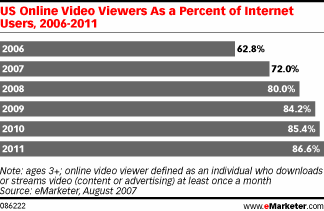
eMarketer projects that by 2011, 86.6% of the US Internet population will consume online video, up from 62.8% in 2006.

In raw numbers, that means the number of viewers will rise from 114 million in 2006 to 183 million in 2011.

US Online Video Viewers As a Percent of Internet Users, 2006-2011

Fonte: «Online Video: Making Content Pay», eMarketer, 14/08/07

Rádio? «Audio Entertainment»!

«Radio One this week named Barry Mayo president of its radio division. (...) In the announcement, Mayo stated: “We are no longer in the radio business, we are in the ‘audio entertainment business’ and we need to leverage our products well beyond the terrestrial signals we are licensed to operate.” (...) Liggins said then, “Our diversification into a broad-based media company consisting of radio, cable, Internet and print is beginning to coalesce, as we continue to identify new and myriad ways to satisfy our advertiser client base. This transition from a pure-play radio company to a media company is longer-term in nature, but I am confident that our team is up to the challenges and opportunities we have before us.” »

fonte: «Mayo: ‘We’re in Audio Entertainment, Not Radio’», Radioworld, 10/08/07

Novos serviços de musica on line recorrem ao FM

«(...) And what about the similarity in names between Last.fm and Anywhere.FM? Rekhi admits that the names are "somewhat similar," but adds that a number of online radio stations are now using the "FM" letters. "We thought it was appropriate and speaks to the fact that we make your music accessible anywhere and allow radio stations in the form of Friend Radio," said Rekhi, referring to the service that allows users to listen to random mixes of songs from their friends' play lists

Apetência cada vez maior pelo vídeo

«Os vídeos online são um dos mais recentes fenómenos a nível mundial e têm vindo a revolucionar a forma de utilização dos media digitais.O visionamento de vídeos em sítios do tipo do YouTube sofreram um enorme crescimento no último ano, mostra um estudo da Magid Media Futures A popularidade dos vídeos online, colocados à disposição dos utilizadores da internet, tem vindo a sofrer um crescimento exponencial nos últimos anos. Se em 2006 eram 9% os norte-americanos entre os 12 e os 64 anos que afirmavam recorrer diariamente aos vídeos online, esse número subiu para perto de 15% em 2007. Este foi o resultado de um estudo levado a cabo pela Magid Media Futures nos Estados Unidos, ao qual o M&P teve acesso. Também a análise do uso semanal do vídeo online mostra uma subida acentuada durante o último ano. Actualmente, a maioria dos americanos entre os 12 e 64 anos (52%) afirma recorrer ao vídeo online pelo menos uma vez por semana, enquanto que em 2006 a percentagem era de 44%.»

fonte: «Boom de vídeos online nos EUA», Meios e Publicidade, 31 de Julho de 2007, por Maria João Morais

A função que o video pode desempenhar: «(...)comScore reports that in May of this year, three-fourths of Internet users watched an average of nearly three hours of online video that month.  This translates to 132 million Americans watching streaming video, with YouTube leading the way.  And of those consumers, they average two videos a day. So what does this tell us about our content and our business?  Video needs to be a component of everything we do.  It needs to be integrated into our personality shows, whether it's via webcams or listener-submitted videos.  Events need to be covered with video to capture the excitement of station events, contests, interviews, etc.  The video age online has signaled increased interest in going behind the scenes to see what happens at stations.  It involves the listener in the process, and provides her with a unique/on-demand perspective. The online video revolution also should signal the need to acquire employees (jocks, promotion people, etc.) who have basic video editing skills.  We need to be thinking video in our hires, and making sure that our stations are staffed with employees who "get" the visual side of what we do.  Every time I visit a web site that uses "photo galleries" to cover an event (often too many pictures posted that are not edited and poorly/not labeled), it screams how out-of-date stations often end up looking to listeners. In the same way that walking into a home that last had interior decoration done in the '80s simply looks tired and dated, radio needs to critically assess its websites and total approach to how it presents entertainment.  Consumers are moving at a rapid rate as the comScore data illustrates.  TV and newspapers have hopped on the video bus and are doing their best to move forward.  Radio needs to get moving, too.» (fonte: Fred Jacobs, «Theater Of The Mind», Jacoblog, 7/08/07)

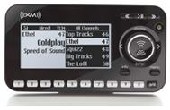
Integrar a imagem na rádio: receptores satélite (EUA) com ecrãs

«XM Satellite Radio has unveiled two new devices: the XpressR and XpressEZ. The XpressR is the first satellite radio with split screen display, and includes a 30-minute pause and replay. The XpressEZ is an entry-level radio. (Right: XpressR, Photo Credit: © XM Satellite Radio) »

A imagem como solução para o futuro da rádio

«Radio is not just becoming an interactive medium: it is also becoming increasingly visual and platform operators and supporters of DAB or DMB broadcasting must address the threat of Visual Radio on mobile phones, which uses ordinary FM signals into the handsets and synchronises them with WAP/GPRS connections via the mobile network to deliver enhanced data including colour images of artists, station logos or products that are being advertised. (...) Visual Radio - pioneered by Nokia, marketed by HP but only available on a handful of systems worldwide, represents a very limited radio market today. However, it combines the efficiency of FM over-the-air broadcasts with a two-way, one-to-one connection that makes true interactivity possible, including the ability to link to websites, send emails and download ringtones or other services that can be monetised. Visual Radio looks like a killer application, especially for those targeting youth markets. It is an example of the power of mobile phones as radio devices, the emergence of significant new players in the radio industry (like Nokia as a receiver manufacturer), and an indication of how radio is quickly evolving beyond audio-only. (...) How will the DAB-based marketplace respond to Visual Radio? DAB already contains the tools, in the form of MOT (Multimedia Object Transfer) Slide Shows, to deliver still images alongside audio. But where are the colour displays that will make free-to-air digital radio broadcasts as graphically rich and compelling as Visual Radio? Are digital radio platform operators interested in delivering still colour images and is there a business model to support it, bearing in mind that mobile phone operators can draw upon subscriptions or pay-per-use GPRS connection time to fund Visual Radio? Is there an advertising/sponsorship model that could make truly visual radio possible on free-to-air digital radio? The emergence of visual radio looks so compelling, from a consumer perspective, that it begs the question: will there be any other kind of radio 20 years from now? How should radio broadcasters, content creators and platform operators view this innovation in terms of their future businesses? Perhaps the biggest potential for radio-to-mobiles is in interactivity.
Visual Radio is the pinnacle of interactive radio
, delivering rich graphics on a dedicated 'back channel' and providing the means for the listener/viewer to communicate directly with the radio station, or perhaps better still for commercial radio station owners, with an advertiser. Is direct response led advertising, and records of website hits during a promotion, a realistic ambition for radio-to-mobile?»

texto de apresentação do The Digital Radio Show 2007, 11 e 12 de Junho 2007, Londres

O video não é uma ameaça, é uma oportunidade...

diz Fred Jacobs:

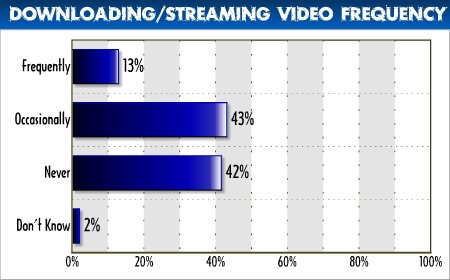
«The video revolution is underway, led in large part by YouTube.  While most people focus on its sale to Google for $1.65 billion, consider this:  YouTube didn't even exist until February 2005.  This reinforces the amazing potential of web-based business concepts, as well as the meteoric rise of streaming video. This year's version of the Jacobs Media Tech Poll reinforces the video phenomenon among Rock Radio listeners.  (Consider that we didn't even ask about video streaming until this year's poll.)The data shows the rising tide for video streaming, as over half our respondents download/stream video on a frequent or occasional basis.  Of them, nearly three-fourths visit YouTube.

Stream_video_freq_07_blog

Of course, this has implications for radio, a world in which pictures have traditionally not existed.  But today, listeners expect to see video.  Video is everywhere, from flat-screen TVs to phones to iPods to elevators. Radio's ability to turn that corner and provide cool video of a morning show stunt, the "Rock Girl" competition, the backstage scene from concerts, or as a way to recap a great event are all new applications that can breathe life into terrestrial radio, its personalities and its communities.  But most stations don't have a webcam, can't post simple video to their websites, and often lack a person in the building with rudimentary editing skills.  (After watching my 15 year-old son and his friend edit a 5-minute video on iMovie the other night, it dawned on me that these are not skills that require a high level of tech knowledge.)» (fonte: «Video Helped The Radio Star», Jacobs Media, 7/06/07)

Video isn't a threat to radio - it's an opportunity.

A importancia do video

«Kids hate to be bored. This is no joke; it is a real issue. They have shorter attention spans, are used to a diet of highly stimulating visual information. From an early age they are gratified instantly and so have less patience for delay of any kind."[Eric Miller]. True, they are used to a stimulating environment. True also, kids hate to be bored. This is not surprising, given that they are more knowledgeable, likely smarter and more active than their boomer parents. Interaction with the digital media is many things but it is not boring - perhaps explaining why so many of the Growing Up Digital kids said "TV was boring by comparison. But as for instant gratification and short attention spans - at best , loaded terms - the evidence isn't there. best» (Tapscott, 1997: 108-109).