Blogia

Transistor kills the radio star?

Previsões para 2007 (EUA): continua a queda nas audiências

Os dois quadros seguintes, publicados pela Bridge Ratings («Bridge Ratings 2007 Projections & Predictions», 1/01/07), mostram duas coisas muito claras (pelo menos nos EUA):

- 2007 vai continuar a ser um ano de queda para a rádio tradicional (por oposição à rádio atraves da internet ou, nos EUA, a rádio por satélite);

- a escuta de rádio entre os jovens virá para números nunca antes verificados (no primeiro quadro pode ver-se que desde 2002 que os jovens já não ouvem mais do que o universo de todos os ouvintes, neste caso com mais de 12 anos; em Portugal ainda temos mais escuta por parte de jovens do que o restante universo)

O primeiro serviço de internet para carros

Era só uma questão de tempo; e se o serviço ainda é primário, não vai demorar muito até que ganhe qualidade...

«Fasten your seatbelt. Because the driving experience will never be the same again. With Autonet Mobile, the first ever, always-on mobile broadband network, you and your passengers can now enjoy internet services and Wi-Fi connectivity whenever you want to by turning your car into a Wi-Fi hotspot on wheels. IM, chat, stream media, email, games, on-line listen to music and more» (http://www.goautonet.com/wp/)

Mark Ramsey:

«Without question there will be significant demand for the services that always-on connectivity can provide. And that includes streaming audio, a.k.a. "radio." It is absolutely, positively inevitable that virtually every new vehicle will, within the next five years or so, be a potential roving hotspot. Who owns the featured and preferred access path under that scenario? Because access - distribution - will be the key value point in the process. In the world of mobile radio, our distribution is currently both universal and exclusive. But when "the box" belongs to a third party, we are assured of neither easy distribution nor universal access. The "box owners" will do what Apple does with iTunes: Yes, anyone can post a podcast. But a very few are "featured" while most are not. The "filters" control the value. And in this scenario you and I are no longer the filters. Put another way, anyone with a "Rock station" can theoretically buy access for that "station." If he has enough money. It's time for the radio industry to put our money where our cars are. Historically, every car has a radio because every driver wants one. What if every driver one day wants something else more?» (http://www.hear2.com/2007/01/the_first_inter.html)


Mandar ou não mandar (a rádio e o iPod)

«We have put customers in control and they like it. You like it in your personal life. I like it in my personal life. I have an iPod, you have an iPod, everybody has an iPod - and there are times when I want to listen to the music I want to listen to. And frankly, there are other times when I don’t want to be bothered with all that and I do want to tune into my favorite radio station.

What about HD radio? When the radio was basically the only choice in a car – AM or FM or whatever – then advancements in radio technology could play an important role. If you look at the car companies today, they’ve had to engineer the cars to be compatible with iPods. They’ve had to re-engineer their tuners so that they could either carry XM or Sirius. I’m afraid in some respects the technology has sort of diminished the importance of HD radio. Again, though, because it’s a dogfight, you’re fighting for attention both with consumers and also with the manufacturers. I’d be fighting like crazy to make sure that HD radio gets promoted to the car industry so that they start installing the technology. In the past, the auto industry would pick up on these things automatically because they had limited choice. Not any more.»

fonte: «The Auto Industry’s Bad Branding – a Lesson for Radio», Hear2.0, 4/01/07

A rádio ainda não perdeu a luta pelo domínio no carro

«As expected, XM will be displaying their pimped-out show vehicle at CES 2007, that will be packed to the gills with current and concept systems from XM's arsenal. This year the concept vehicle is called the XM "Infotainment" Vehicle, which is only a slight improvement to last year's super-sexy XM Advanced Services Vehicle namesake. Forgetting the name though, it's the vehicle that is drool inducing. The "Infotainment" vehicle will of course be packed with XM's new personal weather tracking system, which is just an incredible innovation. The vehicle will also showcase a variety of information and entertainment services (get it?) that XM has the ability to deliver to the automobile. And yes, for yet another year, we will be graced with yet another glimpse at the in-car video system developed by XM and On2 Technologies that can receive both video and audio from XM's current infrastructure. But beyond video, thankfully, the XM show vehicle is expected to be packed with other technological goodies. Goodies like XM's conversational voice-recognition software developed in conjunction with VoiceBox Technologies (view video here). The voice-command technology will not only include controls for the radio, but also for weather, traffic, stock quotes, and sports scores. Also as part of the "Infotainment" vehicle will be the XM ParkingLink, a parking-spot locater integrated into your GPS navigation system. XM ParkingLink will hopefully be offered to the general public in the second half of this year. The XM "infotainment" vehicle will be on display at the XM booth (CES Booth #4606) in the Las Vegas Convention Center's North Hall. Can't wait to see it.»

fonte: Orbicast, «CES 2007 Preview: XM's "Infotainment" Vehicle», 3/01/07

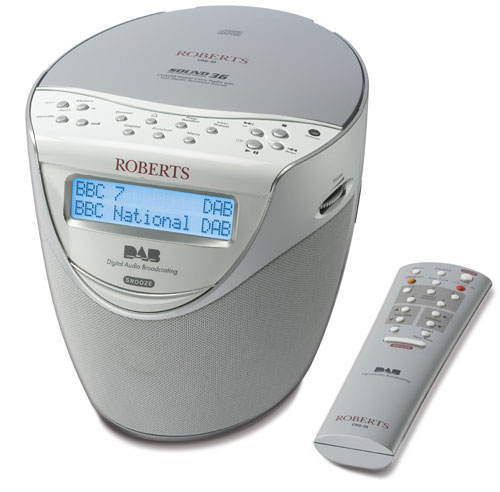
Convergente e barato

«The good thing about technology is that even if it starts out on the pricey side, you know that at some point it'll slide sufficiently down the tech scale to be affordable to even the slimmest wallets. This DAB radio comes with a CD player built in, and still costs a reasonable £100»

O consumo de rádio digital em 2010

«The number of consumers switching from analog to digital radios is expected to gain momentum worldwide, driving unit shipments to nearly 25 million in 2010, a market research firm says. That number compares with 5 million digital radio receivers shipped last year, In-Stat said. The major factors behind the expected increase in demand will be falling prices, more and better programming, significant boosts in advertising and promotions, and better features in digital receivers. Digital radio proponents say reception is superior to conventional broadcasting and enables a variety of "data services," including text-based information, such as artist name, song title, weather alerts, school closings, etc., scrolled across a receiver's display. A recent market study by In-Stat also found that 73% of U.S. respondents to a consumer survey were aware of high-definition radio on some level. In Europe, primarily the United Kingdom, digital audio broadcasting is the pervasive form of radio, with digital receiver shipments expected to outpace analog shipments this year.»

fonte: « Growth Forecast For Emerging Digital Radio Market»

Desligar o AM nos proximos anos (GB)?

«Radio broadcasts on medium wave will end within a few years if a powerful coalition of commercial radio interests has its way.Ofcom, commercial radio's regulatory body, will launch a debate in the coming months on the future of radio. Many predict that it will result in the end of AM broadcasts as we have known them since the days of the Home Service and Light Programme. The growth of digital broadcasts, either on radio, over the internet or through digital television, has left commercial AM broadcasts with only 3.8 per cent of the national audience this year. While the BBC remains on the sidelines — the vast bulk of its weekly Radio Five Live audience of 5.7 million still listens on AM — leading figures in the commercial sector are determined to sound the death knell of medium wave. The commercial stations are having to face up to the dwindling numbers tuning in to AM stations as people opt for FM broadcasts or, increasingly, the higher quality of digital broadcasts. "The current AM licences are up for renewal in 2011 and 2012," an Ofcom spokesman said yesterday. "The question we have to address is whether or not these stations will be commercially viable by then." Fru Hazlitt, the chief executive of Virgin Radio, is an outspoken critic of AM. "We pay huge amounts of money to Ofcom for the AM licence," she said. "Within the next year or two we should switch it off. It just isn't worth it." Andy Duncan, the chief executive of Channel 4, predicted that, over the next five to 10 years, AM and FM listening would wither away. Capital Radio bosses have also been calling on the Government to set a date to switch off both AM and FM. Not everyone agrees, however, that AM is a dead duck. Emap, whose Magic AM has been relaunched nationwide, believes there is still a place for medium wave. Ofcom said it hoped to begin a wide consultation over the future of AM. "There could be much more effective uses for this spectrum — it could be used for community radio," the spokesman said. "The growth of digital at the cost of analogue cannot be ignored."»

fonte: Daily Telegraph, «Wave farewell to AM radio, say experts» By David Sapsted, 30/12/06

O Windows chega ao carro (Ford)

«In what might be the start of an exciting technological future for cars and trucks, Ford Motor Co. and software giant Microsoft Corp. are expected to jointly announce soon that new Windows Automotive software soon will be available in Ford vehicles. The new technology -- dubbed "Sync" -- will finally bring together two industries that have long been expected to cross paths, allowing consumers to use their vehicles as computers in key ways, such as hands-free cell phone calls or downloading music or receiving e-mail.

Ford and Microsoft are expected to reveal the project during media days at the North American International Auto Show in Detroit, which begins Jan. 7, and the Consumer Electronics Show in Las Vegas, which opens to the press a day earlier. Microsoft officials have acknowledged a joint announcement will be made during the shows, but Ford officials refused to comment publicly on the reports. Several Web sites have been reporting about the expected announcement in recent days. "We've learned from a source close to Microsoft's car-computer project that Microsoft and Ford are planning to announce the U.S. availability of the system in 2007," the technology blog site Engadget.com says. The Wall Street Journal published a report Friday about the companies' plans, as well, saying the technology will debut next year as an option on at least two Ford models that are to be freshened next year, the Focus and Five Hundred. Sync will be available on all Ford models starting in 2008 and will be phased in to Lincoln and Mercury models later.

According to a concept Hummer H2 vehicle shown at the Consumer Electronics Show in 2004, the Microsoft technology works through a computer located on the vehicle that runs Windows Auto software. The computer uses Bluetooth to connect wirelessly with a mobile phone in the car, which in turn connects to the Internet. Motorists communicate with the system through a microphone embedded in the roof of the car. (...) Microsoft already has been working with Fiat, which does not sell vehicles in North America, to use Windows Automotive software in cars -- an infotainment project that was unveiled at the 2006 Geneva auto show and labeled "Blue&Me." Motorists already can use that system in vehicles such as the Fiat Grande Punto and the Alfa Romeo Brera, 159 and Spider models. But the Microsoft project with Ford will be the first of its kind in North America.»

fonte: «Fords are expected to feature Windows», Detroit Free Press, 30/12/06

Sobre o projecto Blue&Me: «The Windows Mobile® for Automotive-based infotainment package comes with Bluetooth® and USB connectivity, which allows drivers to listen to music from their personal integrated media player. It also features a hands-free phone kit that can be controlled completely by voice control. The system is the result of the partnership that Microsoft and Fiat Auto initiated two years ago — an extremely short time in which to bring such a device to market»

MArk Ramsey dirige-se à industria radiofónica, tentando acordá-la:

«If you can use your car to download music, you can also use it to stream music. And if you can stream music then you can do so from any number of music providers, not just your radio station. That entertainment time comes, in part, from the primary in-car entertainer, and that, my friends, is YOU. What is YOUR group doing to be in front of this trend? What is YOUR group doing to be in every car in every way in 2007 and beyond? What content do you have that every Ford will want to stream? And where does this leave satellite radio and especially HD radio?»

As consolas de jogos também concorrem com a rádio

As consolas de jogos não são concorrência à rádio apenas porque disputam o tempo disponível, agora atomizado perante uma panóplia de suportes (e sabendo-se como estas consolas são viciantes, pouco tempo sobra para outros...). A partir do momento em que essas consolas se tornam portáteis e incluem reprodutores de música (seja em mp3 seja um leitor de CD), e, fundamentalmente, que a rádio não aparece, ouvir música passa a ser feito através de outras plataformas.

Veja-se o caso do Game Boy Advance, que permite ouvir música através de um cartão de memória SD (Nintendo). A Play Station Portable (PSP) da Microsoft também permite reproduzir música gravada em mp3 ou receber pela internet.

Este mesmo sistema da Nintendo também trabalha na consola fixa (com auscultadores ou colunas). O mesmo se passa com Xbox («Copie música para o disco rígido da Xbox 360 e partilhe as suas imagens mais recentes com amigos. Estabeleça a ligação e a Xbox 360 transfere instantaneamente o conteúdo multimédia digital armazenado no leitor de MP3»)

O mp3 está a mudar os hábitos no carro

«Car audio systems are almost ubiquitous in Europe. So vehicle suppliers and manufacturers are looking to digital radio, satellite radio, Bluetooth and other alternatives as revenue generators. That’s the conclusion of consulting company Frost and Sullivan, which said car systems are close to becoming a “standard, saturated product offering.” The company said OEMs must “strike the right balance between offering sophisticated features while ensuring cost-effectiveness.” It said the car audio systems market in Europe pulled in 1.49 billion Euros in 2005 and will reach 2.37 billion by 2014 thanks in large part to “explosive” growth of MP3 head units. “Consumers increasingly want to use the MP3s they burn at home inside their cars,” stated a company official in the announcement. “MP3s are also available, physically separate from the CD, from many other sources. These factors are driving the demand for OE audio systems to offer MP3 playback capabilities — a trend that is promoting future market growth.” He said carmakers are challenged because the typical time for construction of a vehicle is three to five years, while the typical lifetime for a consumer electronics standard is about a year and a half.»

fonte: RWOnline, «Digital Media Will Push Growth in a Stagnant Euro Car Audio Market», 28/12/06 

Moduladores FM continuam a ser contestados

Aperta-se o cerco - de consequências imprevisiveis nesta altura - aos moduladores de FM que usam o sistema wireless para retransmitir leitores digitais de áudio:

«The Consumer Electronics Association is encouraging members to comply with FCC regulations concerning FM modulators. RW Online has reported that NPR is watching to see the impact of efforts by satellite radio companies, receiver manufacturers and the FCC after the holidays as consumers purchase new products. The commission began an informal inquiry into wireless modulators to confirm compliance with its regulations. NPR and NAB had submitted engineering studies showing that some FM modulated products were emitting too much power and interfering with some terrestrial FM stations. CEA has been in contact with the FCC on the issue; and XM and Sirius had some of their products re-tested, re-certified and approved for sale. In its daily newsletter CEA Smartbrief, the trade group encourages members that manufacture FM modulators to “ensure that they are compliant with FCC regulations, and to ensure that the devices are compliant with the products’ original FCC certifications.”»

fonte: RWOnline, «CEA Encourages Members to Comply on FM Modulators», 28/12/06

Grava tudo do ar (até de mais?)

 O Replay A/V -8.02 da Applian Technologies grava tudo.

«Applian Technologies can take just about any kind of programming stream and transfer it to almost any kind of personal digital replay device. Replay A/V version 8 can grab XM and Sirius online programming, whatever's being played in web-only radio or video stations, podcasts, material from Windows Media, Real, Flash, Shoutcast, iTunes Radio and more. It can be used live or programmed to activate at a given time. It produces MP3s or CDs. (...) There's a media revolution going on now, and Replay A/V is destined to be a huge part of it." RBR observation: Where Dettering sees a "revolution," we see a copyright nightmare. A difficult situation is only going to get worse, since the inventors sitting in their garages and basements, limited only by their own ingenuity, can work at a lightning clip. (...)»

fonte: RBR news, «Streaming device captures on-line programming», 28/12/06 (v23 n250)

HD chega ao Canadá (em detrimento do DAB)

«The Canadian Radio-Television & Telecommunications Commission has announced a revision to its policy for digital radio broadcasting, opening the door to the HD Radio In-Channel, On-Band system.

The CRTC commented that it would be prepared to authorize services using IBOC/HD Radio technology for the AM and/or FM bands, if the Canadian department of Industry authorizes services using the technology under the Radiocommunication Act. The commission added that “an expedited process would be adopted for stations that propose to transmit a digital simulcast of their analog service.”

Robert Struble, president and CEO, iBiquity Digital Corporation, said, “The Canadian Broadcasting Corporation began HD Radio testing in September 2006, focusing on transmissions from Toronto and Peterborough, Ontario. Full results have not yet been published by the CBC, but early feedback has been very positive.”»

fonte: «Ruling Opens Door For HD Radio Broadcasting In Canada» Radio Ink, Dezembro 06, 

«The Eureka DAB system, using L-band frequencies, didn't work out as hoped in Canada, so now it looks like our neighbors to the north may embrace the HD Radio in-band on-channel (IBOC) system already deployed in the US. (...) even if L-band digital had worked better (the number of repeaters proved to be prohibitively expensive), a considerable Canadian market would have developed for add-on HD Radio receivers for folks who regularly drive across the border. It should be better for both countries for the US to have the same digital radio system as our neighbor, even if they do insist on spelling it "neighbour."» (RBRnews, 28/12/06)  

Os que resistem ao PPM boicotados?

«Arbitron is just weeks away from going live with PPM ratings in Philadelphia, but a reliable source in the market tells RBR that neither Clear Channel nor Radio One stations are encoding. That's 37.5% of the market's billings. We also heard, but couldn't confirm, that Carat told Arbitron they are not going to buy any stations that are not encoded. If there were several agencies doing that, it would put enormous pressure on the radio companies to encode. The deadline for PPM encoding is Jan 11 in the market. Arbitron PPM President Pierre Bouvard tells RBR: "In conversations with many agencies across the country, we hear they are making these kinds of demands for PPM encoding because of pressure from outside auditing firms who review their buys. If someone is not encoding, they will be essentially an unrated radio station. There are many advertisers that have dictates that say you can't buy unrated radio stations. That's why we will give any station an encoder for free." RBR observation: Why are CC and Radio One inflicting wounds on their own industry? The reasons for Clear Channel's not encoding: Now that they're going private, they don't need to bow to Wall Street pressure, so they can afford to gamble for a year (the deal will still be executed at the same price, no matter what), further posturing against Arbitron for lower rates and/or hoping Media Audit gets the RFP recommendation. Radio One is just following in their footsteps because of its close relationship to CC and its own battles with Arbitron over rates»

fonte: RBR news, 23, 249 Jim Carnegie, 27/12/06

iPod e rádio (mais...)

«X-OOM has developed the MP3 Radio Recorder for the iPod where you can listen to a number of radio stations via the software’s web interface (...) I found the program to be pretty useful if you want to extend the usefulness of your iPod. The quality of the streaming audio is not going to be CD quality so making a recording from the streams will be a little disappointing. The program does have CD ripping and burning capabilities which is a nice feature. The program's ability to record and transfer directly to your iPod also works very smoothly»  

As rádios convencionais estão a perder valor?

Corey Deitz acha que sim, a propósito do anúncio da venda de uma parte significativa das estãções da Clear Channel:

«With competing technologies like Internet radio, Satellite Radio, audio content on cell phones, Podcasting, and WiMax, the value of old media AM and FM radio stations continues to fall»

fonte: «Top 10 Radio Stories of 2006», RadioAbout, 25/12/06

A quebra na venda de CD (Portugal)

De acordo com a Marktest, nos ultimos tres meses de 2006 a venda de CD audio passou de 37,3 % (em 2004) para 29,8% (2006). Ou seja, uma queda de quase 10 por cento.

fonte: «O que mudou no consumo dos portugueses?», Marktest.com, 28/12/06

Mais sobre a rádio musical tornar-se obsoleta

Partilho com os leitores esta experiência notável:

Ontem uma das minhas séries de televisão favoritas, Cold Case (Casos Arquivados), terminava com uma versão espantosa da música «Somewhere over the rainbow».

Hoje de manhã foi ao Google e conciliei o nome da série e o da música e cheguei lá. Um artista do Haway, já falecido, com um nome impronunciável (Israel "IZ" Kamakawiwo'ole). Como na Amazon não vendem tema a tema, copiei o nome para o iTunes e comprei a música por 0,99$. Mais: fiquei a saber que é a versão mais vendida do «Somewhere over the rainbow); Aqui podem ouvir uma amostra do tema (de borla, claro).

Penso que é mais um caso que demonstra que a rádio musical - se não se posicionar como alternativa digital - ficará obsoleta. Viva a globalização, já agora!

41 dias por ano a ouvir rádio

nos EUA.

Parece-me de mais, mas...

«Nearly half of our lives are spent with TV, radio, Internet and newspapers, according to the U.S. Census Bureau. Its new “Statistical Abstract of the United States: 2007” indicates adults and teens will spend nearly five months — 3,518 hours — next year watching television, surfing the Internet, reading daily newspapers and listening to personal music devices. (There are about 8,760 hours in a year.)

Among the bureau’s findings: People will spend the equivalent of 65 days in front of the TV, 41 days listening to radio and a little over a week on the Internet in 2007. “Adults will spend about a week reading a daily newspaper and teens and adults will spend another week listening to recorded music.” Consumer spending for media is forecast to be $936.75 per person.»

fonte: «Your Radio Diet Next Year: 41 Days», 21/12/06, RWonline


70% das rádios em Portugal estão na net

«Trinta por cento das 318 estações de rádio portuguesas não têm sistema de retransmissão da emissão hertziana em site próprio da Internet, revela um estudo apresentado esta sexta-feira na Universidade do Minho, em Braga. O estudo, correspondente à tese de mestrado defendida hoje pelo docente da Universidade do Minho Pedro Portela, indica que 31 rádios portuguesas não têm qualquer presença na Internet, seis limitam-se a ter um site (não retransmitem a emissão) e 61 apenas apresentam um sistema de retransmissão em «streaming» (não têm site próprio). «Constata-se que há 30,8% das estações que negligenciam o potencial acrescido que a Internet pode trazer à sua actividade», salienta Pedro Portela, notando também que «as rádios que nasceram na Internet apresentam ainda alguma imaturidade técnica», dado que, muitas vezes, não é possível escutar a sua emissão. (...) Para Pedro Portela, «continua a ser premente que a rádio mude a sua estratégia face à Internet», fazendo um «esforço efectivo» de incorporar todas as características da rede digital que lhe sejam benéficas.

fonte: «Estudo: 30% das rádios portuguesas fora da Internet»,Diário Digital / Lusa, 22-12-2006